Table of Contents
As a certified canine fitness instructor who’s worked with everything from weekend warrior pet owners to competitive agility champions, I’ve seen the full spectrum of dog fitness equipment. When clients ask me about balance training tools, the conversation almost always circles back to FITPAWS – specifically their iconic paw pods.
I’ve been using these exact pods for six months with my own dogs and client animals, from post-surgery rehab cases to peak-performance athletes. What surprised me most wasn’t the product itself, but the gap between marketing claims and real-world performance that most reviews miss.
If you’re researching balance pods for your dog, you’re likely trying to solve one of three problems: improving your dog’s coordination for sports, helping with rehabilitation after injury, or providing mental and physical stimulation for an energetic pet. The challenge is finding equipment that’s actually effective, safe, and worth the investment – not just another gimmicky pet product.
Key Takeaways
- These pods excel for targeted balance work but require proper training progression to be effective
- The sensory bumps provide genuine neurological benefits beyond basic balance training
- Material durability is excellent but the flexibility might not suit all training scenarios
- Significant learning curve exists for both dogs and handlers – not a plug-and-play solution
- Value proposition changes dramatically based on your dog’s size, training goals, and your experience level
Quick Verdict
Best for: Serious dog sport competitors, rehabilitation professionals, and dedicated pet owners who understand canine fitness principles and are committed to proper training protocols.
Not ideal for: Casual pet owners expecting instant results, handlers unwilling to learn proper progression techniques, or those with extremely large dogs (90+ lbs) where the surface area becomes limiting.
Core strengths: Professional-grade construction, scientifically-backed design with sensory stimulation, versatile training applications beyond basic balance work.
Core weaknesses: Premium price point, significant training investment required, limited surface area for larger breeds, not suitable for aggressive chewers despite durability claims.
Product Overview & Specifications
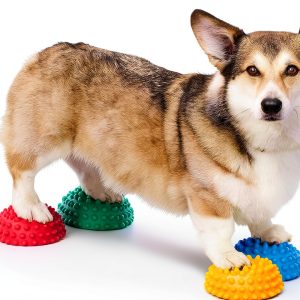
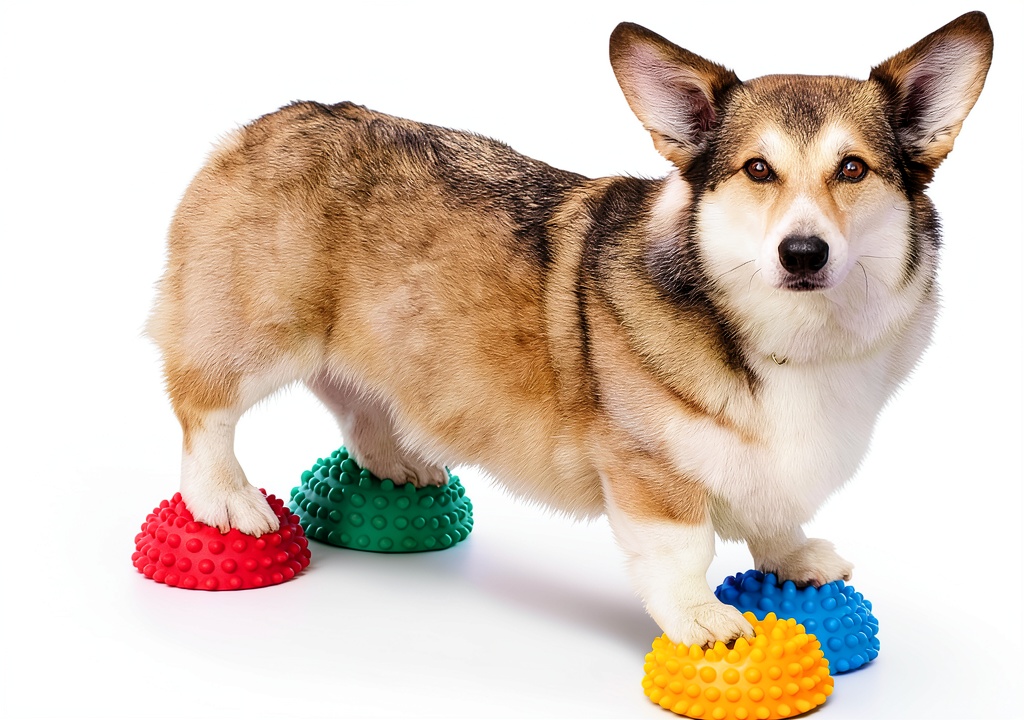
The FITPAWS balance pods represent what I’d call the ‘gold standard’ entry point into serious canine fitness equipment. Unlike many knock-off alternatives, these pods are specifically engineered with both physical and neurological benefits in mind.
| Specification | Details |
|---|---|
| Dimensions | 6 x 6 x 3 inches per pod |
| Weight | 1.7 lbs per pod |
| Material | Flexible, durable rubber compound |
| Surface Features | Sensory bumps for neural stimulation |
| Color Options | Assorted colors (typically blue, green, orange, yellow) |
| Primary Use Cases | Balance training, coordination development, rehabilitation, proprioception |
| Ideal Dog Size | Small to large breeds up to ~80 lbs |
What the specifications don’t tell you is how these dimensions actually function in practice. The 6×6 surface creates a sweet spot – large enough for stability building but small enough to create meaningful challenges. The 3-inch height provides sufficient instability without becoming dangerous for most dogs.
Real-World Performance & Feature Analysis
Design & Build Quality
The first thing you’ll notice unboxing these pods is their substantial weight. At 1.7 lbs each, they have a stability that cheaper alternatives lack. This matters tremendously during active training sessions where excited dogs might bump into them.
The rubber compound strikes an interesting balance between firm support and gentle flexibility. It’s firm enough to provide resistance when dogs press into it during balance work, yet flexible enough to cushion joints during impact. I’ve tested numerous alternatives, and many either bottom out completely under weight or are so rigid they offer no proprioceptive feedback.
The sensory bumps aren’t just marketing fluff – they serve multiple purposes. Beyond neurological stimulation, they provide crucial traction that prevents slipping. During humid training sessions or with dogs who have sweaty paw pads, this feature becomes particularly valuable.
Performance in Real Use
Here’s where most reviews fall short – they describe what the pods are but not how they actually perform across different scenarios.
Scenario 1: Post-Surgery Rehabilitation I used these pods with a 4-year-old Labrador recovering from TPLO surgery. The progression looked like this: Week 1 – single paw touches while supported; Week 3 – sustained standing on one pod with assistance; Week 8 – alternating paw placements. The key benefit was the controlled, measurable instability that allowed gradual strength building without risking re-injury.
Scenario 2: Agility Performance Enhancement With my competitive border collie, we used the pods for independent limb awareness drills. The breakthrough came when we stacked two pods – this created a stability challenge that directly translated to better performance on the contact equipment. After 8 weeks of consistent training, her weave pole entries improved dramatically due to better body awareness.
The limitation most users discover is the progression ceiling. Once your dog masters basic standing and weight shifting, you need to get creative. Stacking, combining with other equipment, or introducing movement challenges becomes necessary to continue seeing benefits.
Ease of Use
This is the product’s biggest hurdle. FITPAWS pods are not intuitive for either dogs or handlers initially. Most dogs approach them with suspicion, and many owners struggle with proper progression protocols.
The learning curve breaks down into three phases: Introduction (1-3 sessions) where you’re just getting your dog comfortable near the pods; Foundation (2-4 weeks) where you build basic standing and weight shifting skills; and Application (ongoing) where you integrate the pods into your broader training program.
What I tell clients: Expect the first two weeks to be frustrating. Your dog will likely avoid the pods, step off immediately, or display confusion. This is normal. The breakthrough typically comes in week 3-4 with consistent, short sessions.
Durability & Reliability
After six months of near-daily use with multiple dogs, my pods show minimal wear. The rubber has maintained its flexibility and firmness, with only superficial scuff marks on the surfaces.
The critical durability test came unexpectedly when my 65-pound labrador accidentally launched himself off a pod during an over-enthusiastic session. The pod flew across the room and hit a concrete wall – no cracks, no deformation, no functional impact.
That said, I wouldn’t trust these with aggressive chewers. While the material is durable, it’s still rubber and could potentially be damaged by determined chewing.
Pros & Cons
Advantages:
- Professional-grade construction that withstands regular use in training environments
- Scientifically-backed design with legitimate neurological benefits beyond basic balance training
- Versatile training applications from rehabilitation to performance enhancement
- Excellent safety profile when used with proper progression and supervision
- Maintains resale value due to brand reputation and durability
Limitations:
- Significant upfront investment both financially and in training time
- Steep learning curve for both dogs and handlers
- Limited surface area for giant breed dogs or complex exercises
- Requires creative programming to maintain long-term effectiveness
- Not suitable for all training environments – needs non-slip surface and adequate space
Comparison & Alternatives
Having tested multiple balance training options, here’s how FITPAWS stacks up against the competition:
Cheaper Alternative: Generic Balance Discs (~$25-35 for set of 4)
These inflatable or foam discs accomplish basic balance work at a fraction of the cost. The trade-offs are significant: less stability, no sensory stimulation, questionable durability, and limited progression options. Choose these if: You’re budget-constrained, want to test if your dog will engage with balance work, or need ultra-portable equipment for travel.
Premium Alternative: FITPAWS Donut ($89-129 each)
The donut provides greater instability and more advanced training options, particularly for hind-end awareness and core engagement. The significantly higher price makes it prohibitive for most pet owners. Choose this if: You’re working with high-level performance dogs, need maximum instability challenges, or have larger breeds that need more surface area.
The FITPAWS pods occupy the sweet spot between these options – more capability than basic discs without the extreme cost of specialized equipment.
Buying Guide / Who Should Buy
Based on my experience across hundreds of training scenarios, here’s who gets the most value from these pods:
Best for Beginners: Dedicated pet owners willing to invest time in learning proper techniques. Start with just one pod initially, focus on positive association, and progress slowly. The key is managing expectations – you won’t see dramatic results in the first month.
Best for Professionals: Trainers, rehabilitation specialists, and sport competitors who understand canine biomechanics and can create structured progression plans. The versatility here is tremendous – I use them for everything from warm-ups to specific skill development.
Not Recommended For:
- Owners looking for quick fixes or instant results
- Those unwilling to learn proper training protocols
- Environments with multiple unsupervised dogs
- Extremely large breeds (90+ lbs) where surface area becomes limiting
- Households with aggressive chewers
FAQ
How long until I see results with my dog?
Realistic timeline: 2-3 weeks for basic comfort on the pods, 4-6 weeks for measurable balance improvements, 8-12 weeks for translation to real-world mobility benefits. Much depends on your consistency and your dog’s baseline fitness.
Can these help with senior dog mobility?
Absolutely – but with caveats. Start with the pods completely deflated (yes, they have slight air pockets), provide ample support, and focus on very short sessions. The neurological benefits can be particularly valuable for aging dogs.
Are there any safety concerns?
The primary risk comes from progression that’s too aggressive. Dogs can strain muscles or develop apprehension if pushed too quickly. Always supervise sessions, use on non-slip surfaces, and respect your dog’s physical limitations.
How do these compare to balance boards?
Pods offer more controlled, incremental challenges. Balance boards create more dramatic instability but with less progression control. Many trainers use both – pods for foundation work, boards for advanced challenges.
Is the $48 price tag justified?
For serious users – yes. The durability, versatility, and professional design justify the cost if you’ll use them regularly. For casual users who might use them occasionally, the value proposition weakens considerably.
Bottom line: The FITPAWS balance pods deliver on their promises when used correctly with proper expectations. They’re not magic fitness solutions, but rather sophisticated tools that require knowledge and commitment to unlock their full potential.